The AI Safety Chapter
We run free workshops and talks that help students and neighbors get a handle on AI: how it works, where it goes wrong, and what to do to stay safe.
What the chapter does
We’re the AI Safety Chapter of Students for Society. We take the confusing parts of AI — scams, privacy, bias, and the new rules being written around it — and put them in plain language. We hold webinars, run hands-on workshops, and give free talks at libraries, senior centers, and community groups.
Webinars & talks
Free online sessions on the AI stories in the news right now, explained for anyone.
Hands-on workshops
In-person sessions where you test your own instincts about AI. Not a lecture — you play along.
Community events
Free talks at libraries, senior centers, and community spaces around King County.
Three quick, free tools
Coming soon: three free tools to help you explore AI and spot potential scams.
Real or AI?
Can you tell what a person made from what AI made? Give it two minutes.
Coming soonIs this a scam?
Answer a few questions about a suspicious call or text and see how worried to be.
Coming soonPlain-language glossary
The AI words you keep hearing, each explained in one plain sentence.
Coming soonUpcoming
What’s coming up.
Next in-person session — TBD
We’ve now run this in two King County libraries. Want us to bring a free session to your library, senior center, faith group, or community organization? We travel, we bring everything, and it costs you nothing but the room.
Webinar #2 — Topic TBD
Our next online session. Have a topic you’d like us to cover? Email us and we’ll let you know when it’s scheduled.
Past events
What we’ve done so far.
Real or AI? — Bellevue Library
Our second in-person session put the game at the center of the workshop. Attendees played twelve rounds of “Real or AI?” — real text messages against AI-written ones, real product reviews against fake, a genuine voicemail against a cloned one — calling each one before the reveal. Two rounds were deliberate traps: in one, both items were machine-written; in another, neither was. The room then voted through two live scenarios (a 9 p.m. call from a grandchild’s voice; a bank fraud text) and finished with a rapid true-or-false round.
The takeaway we build every session around: once anyone can fake a photo, a review or a voice in minutes, “spot the fake” stops working as a defense. What still works is verifying before you act — hanging up and calling back on a number you already have, agreeing on a family safe word, and treating urgency itself as the warning sign. Free pizza was served, no one was asked for an email address, and everyone left with a photograph of the four questions on their phone.
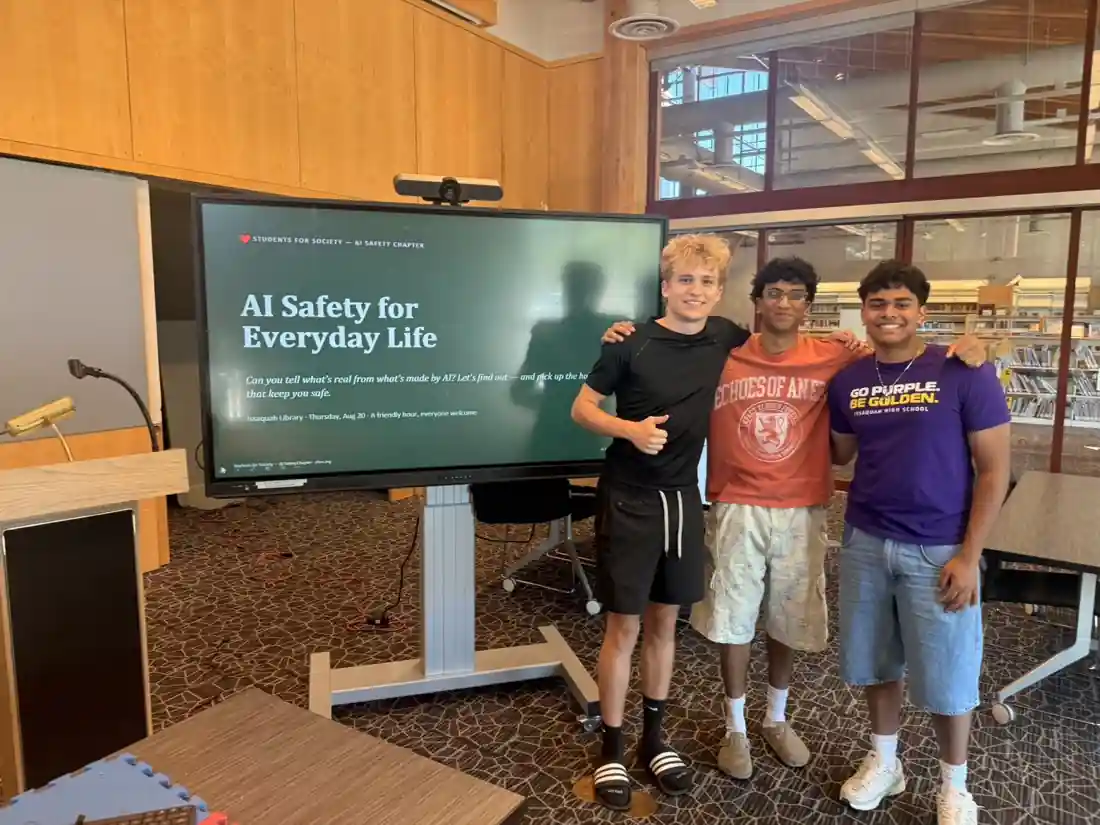
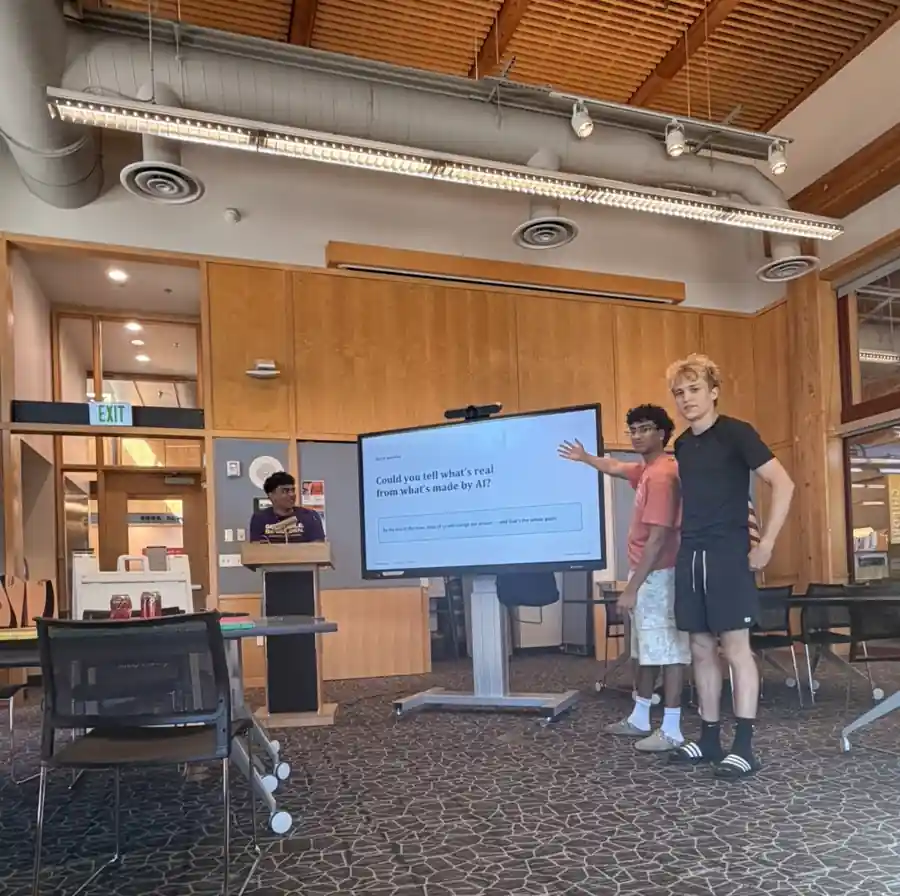
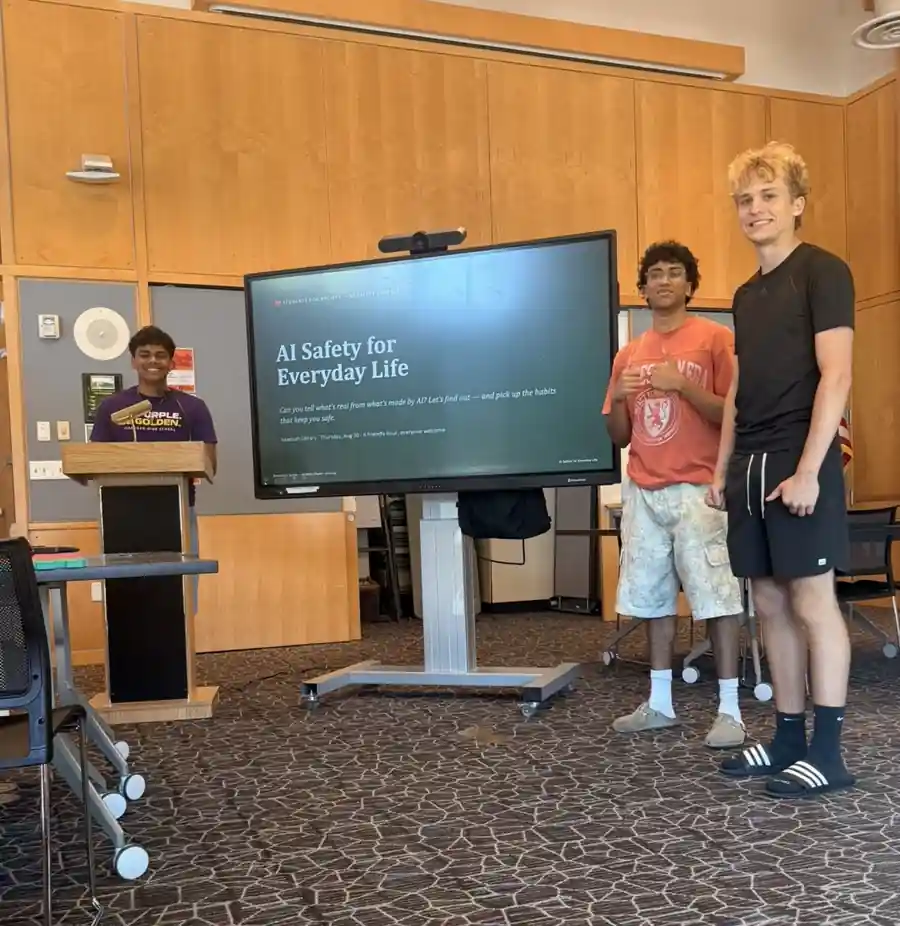
AI Safety for Everyday Life — Issaquah Library
Our first in-person session. Older adults and families came out to the Issaquah Library to play the live Real or AI? game, watch a voice-cloning demo, and take home our printed Family AI Safety Kit. Thanks to everyone who showed up.
Get the slides & handouts →Webinar #1 — AI Safety for Everyday Life
Our first webinar covered the newest AI-powered scams: voice-cloned emergency calls, fake investment videos, phishing texts, and fake virus pop-ups, plus five simple habits that keep you safe. No tech background needed. Slides are below.
Get the slides →Pictures from our events


Materials & handouts
Everything from our sessions, free to download.
Real or AI? — Bellevue slide deck (PowerPoint)
The deck from our September 19 Bellevue Library session.
AI Safety for Everyday Life — Slide deck (PowerPoint)
The full presentation from our webinar and the Issaquah Library session.
Family AI Safety Kit (1 page)
The top scams and exactly what to do — printable for the fridge.
Family “Safe Word” card
How to set up a family safe word that beats fake-emergency scam calls.
“Is this a scam?” quick-checklist
A one-page gut-check to keep in a wallet or by the phone.
Scroll for more ↓
Join the AI Safety Chapter
Want us to run a free session at your library, senior center, or community group? Or want to help write, present, or organize? Email us — students and community members welcome, no experience needed.
Prefer to write directly? Email josh@sfors.org.